Case study · Healthcare

Dodes – structured medical decision trees

Dodes (Diagnostic nodes) is a methodology designed by Prof. Dr. Paul Martin Putora from St. Gallen hospital in Switzerland. It documents medical treatment guidelines in a structured way and allows them to be analysed to promote the most up-to-date medical procedures.

Terminology unification
Comparison trees
Comparison trees
  • 1article in Neurosurgery based on studies using Dodes

About Koderia We connect IT specialist outsourcing with complete software development, from flexible team extension to turnkey delivery. A software company from Bratislava. Clients in our case studies include Orange, ČSOB Pojišťovna, Innovatrics and CxAlloy.

About the project

Guidelines are often free text. Dodes gives them structure.

A medical guideline guides decisions on diagnosis, management and treatment in specific areas of healthcare. Guidelines are updated regularly and are often free-text documents, yet healthcare providers must know them and decide whether to follow their recommendations.

Prof. Dr. Putora proposed documenting the decision-making process as decision trees – a notation that condenses information efficiently and allows comparing decision-making between different healthcare providers.

Industry
Healthcare
Delivered
Tool for documenting and comparing treatment guidelines as decision trees
Competencies
Data analytics, data visualization, microservices
Technologies
JavaSpring StackMySQLApache SolrVueVuetifyDockerKubernetesREST
Challenge

Comparing how institutions decide

To compare decision trees across institutions, the system had to speak one language and compute very large state spaces.

  1. Terminology unification

    Before a decision tree can be created, the terminology for a treatment has to be unified.

  2. Comparison and huge state space

    Comparing trees from many institutions means computing very large multidimensional state spaces.

  3. Data presentation

    Comparison results need to be more compressed and readable.

Need to turn expert knowledge into structured data?Get a similar solution

Solution

Templates, comparison algorithms and parallel computation

We built the tools that let users create, validate and compare decision trees across institutions.

  1. Treatment templateUnified vocabulary
  2. Decision treesGuided input
  3. State spaceMultidimensional coordinates
  4. Parallel computationGoogle task queue
  5. ComparisonNear real-time results

Terminology unification

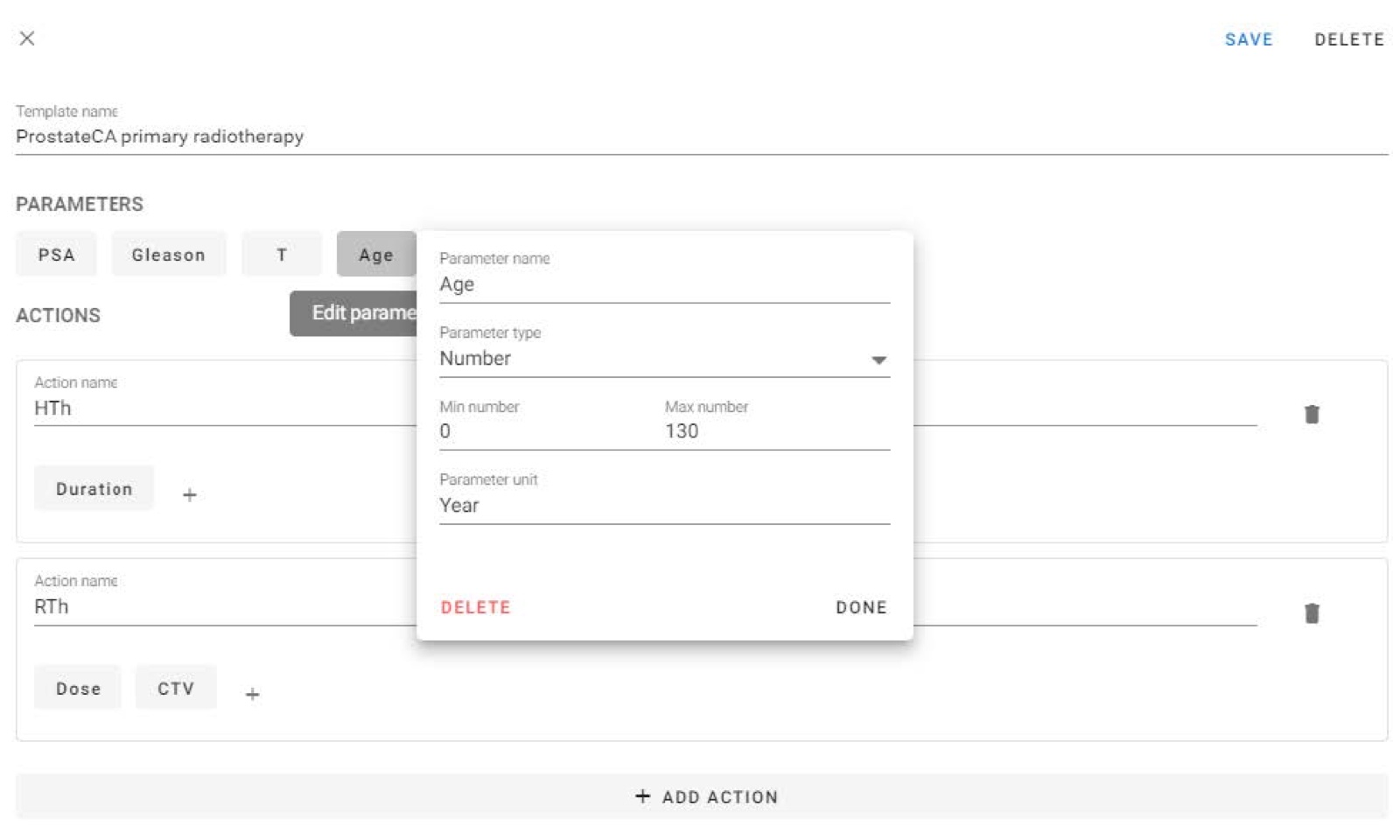
A treatment template defines the vocabulary for decision trees: the parameters to consider in the treatment and the actions that can be performed. When users create a decision tree, the system uses the template to guide them and ease the input.
Terminology unification

Comparison trees

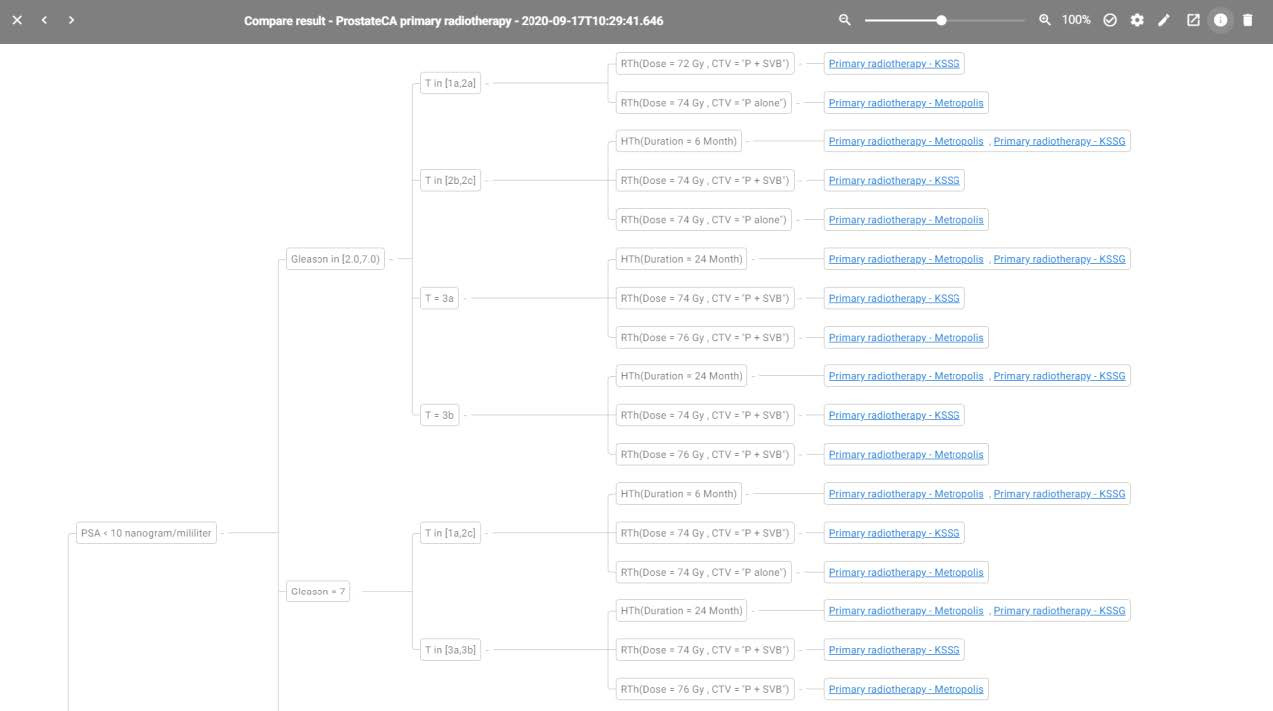
Algorithms transform a decision tree into a multidimensional state space and assign each coordinate a set of actions for a given parameter range. Comparing coordinates reveals differences. From this we generate back a decision tree that represents the comparison. The same approach validates trees, finding parameter ranges with no action or contradictory conditions.

Comparison trees

Huge state space in near real time

Large comparisons run as parallelised computation on the Google task queue: the state space is split into smaller spaces processed on as many computers as needed. Results are merged into a single comparison in near real time, and filters on actions or parameter values reduce the state space further.

Results

Clinical research built on Dodes

Dodes has been used in many studies, some funded by the biggest pharma companies like Roche and Genzyme.

Published in Neurosurgery

Results appeared in the article “Patterns of Care and Clinical Decision Making for Recurrent Glioblastoma Multiforme”.

Reference for clinical trials

Several active clinical trials already target the DODEs identified in the study.

Proven tool

The study credits the authors around Prof. Dr. Putora and proves the tool’s usability in discovering optimal treatment strategies.

“This decision tree is an excellent reference for clinical trial development, and several active clinical trials already target the DODEs identified in this study.” – Neurosurgery reviewers, Review of the Dodes-based study on recurrent glioblastoma

Get a similar solution

Is this for you?

Your rules are written as text. Your decisions need structure.

With Prof. Dr. Paul Martin Putora we built Dodes, which turns treatment decisions into comparable decision trees. The same need appears wherever experts follow rules written in free text and practice differs between organisations.

  • Healthcare and clinical research
  • Insurance and claims rules
  • Regulatory compliance
  • Expert decision support
Sounds familiar?

0 of 5 sound familiar

How we would start

  1. Unify the vocabularyA shared template of parameters and values before any decision tree is drawn.
  2. Structure the decisionsDecision trees that can be compared across institutions.
  3. Compute and show the differencesParallel computation for large state spaces, and filters to focus on what matters.
Guidelines buried in free text?

Tell us
about your project

Describe what you want to build. We’ll get back to you within 24 hours with a proposal for next steps.

Need more info?

Reach out directly to our project managers, who will be happy to tell you more.

Romana Kovalová