Case study · Digital marketing analytics

Data Warehouse Migration

We built a data synchronization and warehousing platform for a thriving e-commerce brand specializing in novelty apparel, such as funny socks and shoes. It brings Shopify, marketing campaign sources and internal ERP tools into a single, unified reporting layer.

Structured, observable orchestration
A clean, version-controlled transformation layer
Automated data quality, built in
  • 3types of data sources in one reporting layer: Shopify, marketing campaign sources and internal ERP tools
  • 3transformation layers: staging, intermediate and marts
  • 2tiers of automated data quality testing
  • 4source types under one framework: REST, GraphQL, CSV and databases

About Koderia We connect IT specialist outsourcing with complete software development, from flexible team extension to turnkey delivery. A software company from Bratislava. Clients in our case studies include Orange, ČSOB Pojišťovna, Innovatrics and CxAlloy.

About the project

Data had to drive marketing and manufacturing. Business users stopped trusting it.

Management needed a system they could entirely rely on. Data from Shopify, diverse marketing campaign sources and internal ERP tools was fragmented across systems.

The legacy data warehouse, built on SQL Server orchestrated by Apache Airflow, had grown into an unmaintainable tangle of hundreds of stored procedures, monolithic pipelines with thousands of interdependent tasks, and no version control. Business users stopped trusting the data after duplicate records and conflicting reports surfaced in client presentations rather than being caught by the engineering team.
Client
E-commerce brand specializing in novelty apparel
Industry
Digital marketing analytics
Delivered
Data warehouse migration and a unified reporting layer
Technologies
SQL ServerAirflowPostgreSQLDagsterdbt
Challenge

A system its own users had stopped trusting

The goal was clear: replace it with a platform where data is trustworthy, traceable, and easy to extend.

  1. Fragility at scale

    A single task failure could silently cascade and block entire pipelines for hours. There was no isolation, no clear ownership, and no way to quickly identify what had gone wrong.

  2. Unmaintainable logic

    Hundreds of stored procedures with overlapping logic and zero version control made every change a gamble. Adding a data source took weeks instead of days.

  3. Eroded data trust

    Duplicates, missing values and cross-source metric mismatches were caught by business stakeholders rather than engineers. Quality was everyone's concern and no one's responsibility.

Facing a similar data problem?Get a similar solution

Solution

A data platform the business can rely on

We replaced the legacy warehouse with observable orchestration, version-controlled transformations and data quality built into every pipeline.

  1. Data sourcesShopify, marketing and ERP
  2. IngestionStandardized connectors
  3. OrchestrationSmall, scoped jobs in Dagster
  4. TransformationThree layers in dbt
  5. ReportingSingle source of truth

Observable orchestration

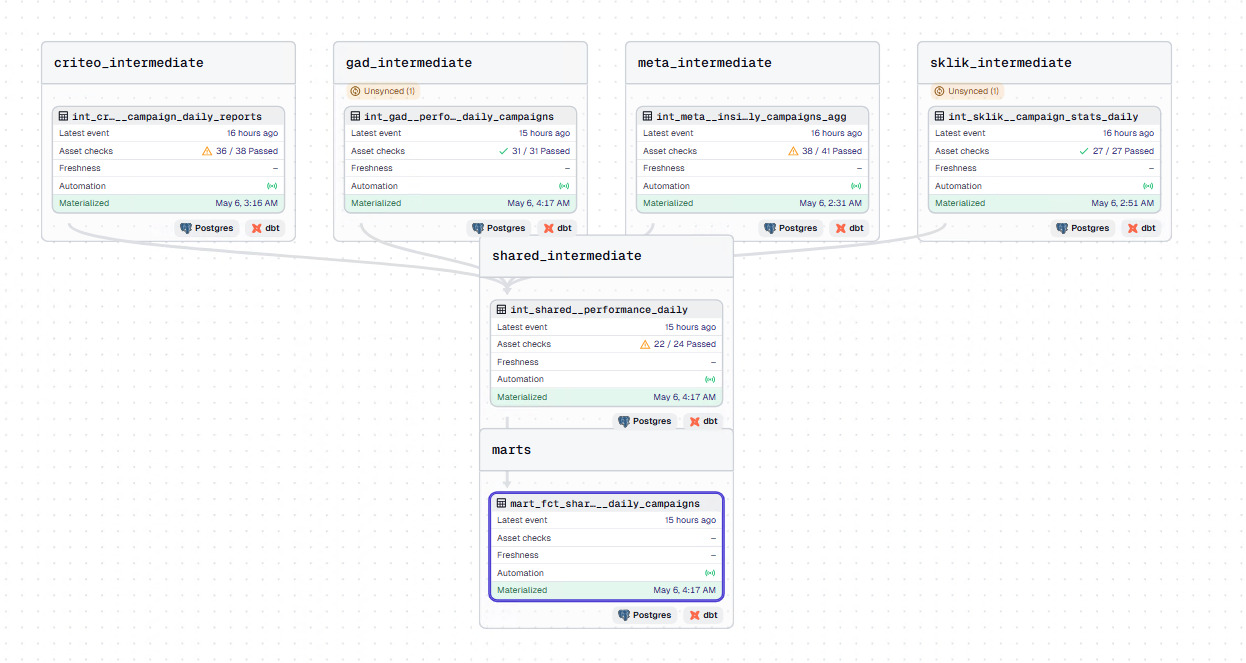
Dagster replaced Airflow as the orchestration engine, with pipelines rebuilt as small, clearly scoped jobs. Every data source follows a consistent, documented module structure. New integrations are predictable and fast, without touching existing code.

Observable orchestration

Version-controlled transformations

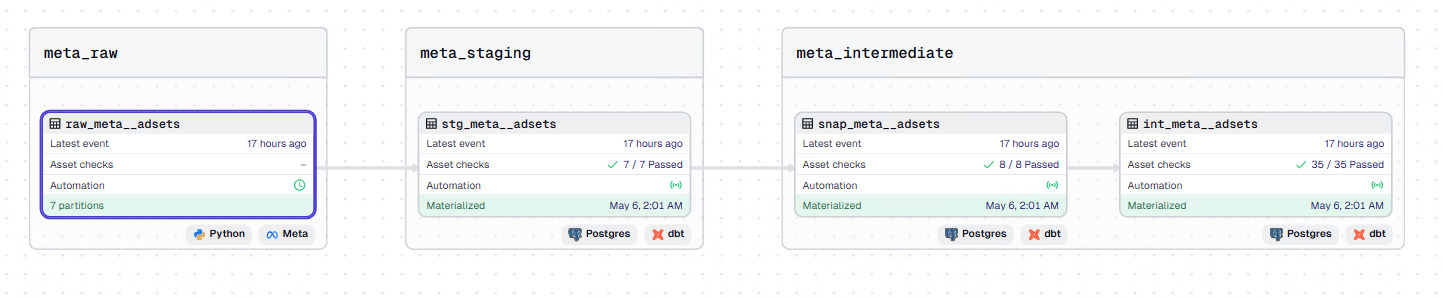
All SQL transformations were rebuilt in dbt using a strict three-layer architecture: staging, intermediate and marts. Every model is documented, typed and stored in Git. The team has a full audit trail and can review any change before it reaches production.

Version-controlled transformations

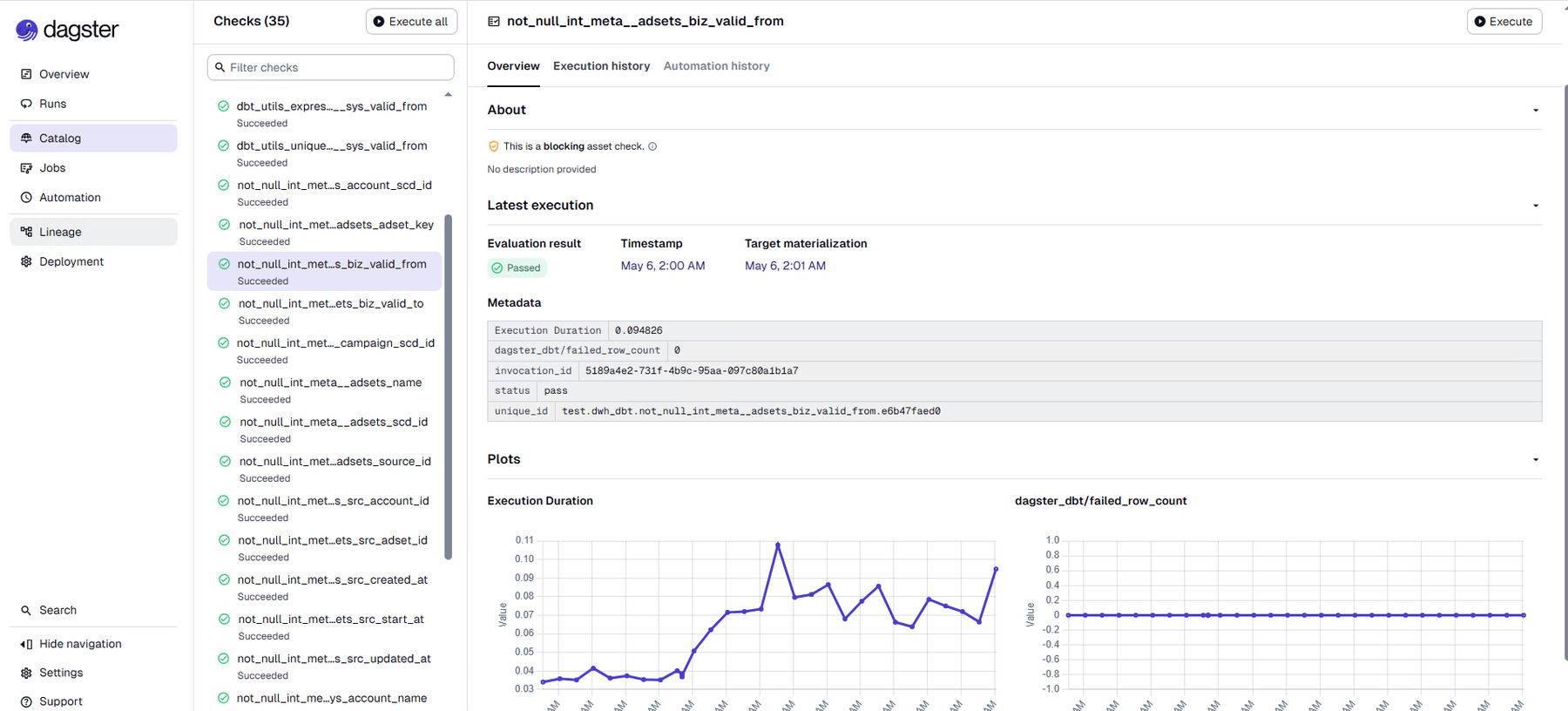
Automated data quality, built in

Two tiers of automated testing … Hourly campaign spend must roll up correctly to daily totals across every advertising platform. Quality is enforced by the system, not left to chance.

Automated data quality, built in
Results

Marketing and manufacturing planned on data you can trust

Today, the e-shop owners use the platform as their primary source of truth.

Single source of truth

Shopify, marketing campaigns and ERP data sit in one unified reporting layer that drives informed marketing decisions.

Manufacturing planning

The owners plan complex manufacturing processes down to the exact product variants and volumes.

Ready for AI

Well-named entities, consistent grain and clean metric definitions make the mart layer ready for natural language querying and automated reports.

Get a similar solution

Is this for you?

Your reports disagree. Your decisions shouldn’t.

We rebuilt the data warehouse of a fast-growing e-commerce brand whose business users had stopped trusting the data. The same problem appears wherever data from the shop, marketing and ERP meets in one place.

  • E-commerce and retail
  • Marketing analytics
  • Production planning
  • Data-driven businesses
Sounds familiar?

0 of 5 sound familiar

How we would start

  1. Audit what you havePipelines, sources and the reports people actually rely on.
  2. Rebuild in clear layersSmall, observable jobs and version-controlled transformations in staging, intermediate and mart layers, as with Dagster and dbt on this project.
  3. Test the data automaticallyStructural checks and cross-source metric validation, so errors are caught before the business sees them.
Stopped trusting your data?

Tell us
about your project

Describe what you want to build. We’ll get back to you within 24 hours with a proposal for next steps.

Need more info?

Reach out directly to our project managers, who will be happy to tell you more.

Romana Kovalová